
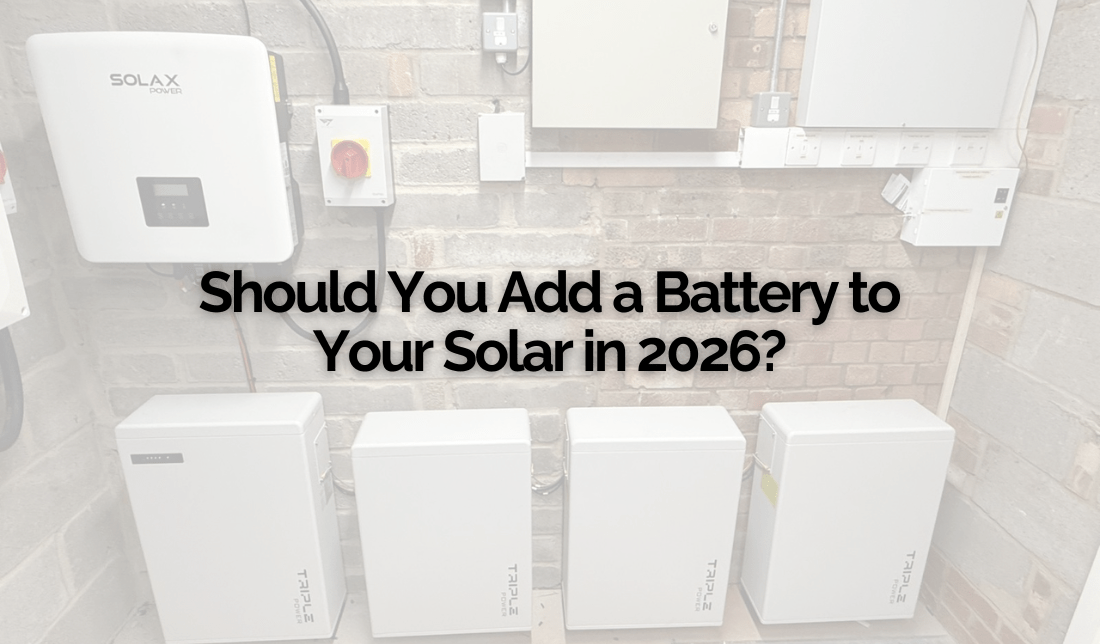
Battery Storage 101. Should You Add a Battery to Your Solar in 2026?

Danny Hirst
Managing Director
Batteries Are the Big Solar Upgrade Everyone’s Talking About
2026 is shaping up to be the year UK homeowners finally say: “I want control over my energy.”
And that’s exactly what solar batteries deliver.
They:
- store your excess solar
- cut your evening and night costs
- protect against outages
- future-proof your home
- help you dodge high-rate peak tariffs
But… is a battery actually right for your home? Let’s break it down simply, no jargon, no hype, just the truth.
What a Solar Battery Actually Does
A battery stores electricity from your solar panels during the day.
You then use that stored energy:
- in the evening,
- overnight,
- during peak-rate times, or
- even during a power cut if you have backup capability.
Think of it as a money saving reservoir that fills up when the sun shines and empties when you need it.
Why Homeowners Love Batteries in 2026
How Much Does a Battery Cost in 2026?
Costs vary based on brand, size, wiring, and whether it’s:
- AC-coupled
- DC-coupled
- part of a hybrid system
But here’s a realistic 2026 guide:
| Usable Size | Typical Cost (Installed) | Best For |
|---|---|---|
| 5–7 kWh | £3,000–£4,500 | Small homes, light evening use |
| 10–13 kWh | £5,500–£8,500 | Most 3–4 bed family homes |
| 15–20+ kWh | £9,000–£14,000+ | High usage or EV owners |
Payback: typically 6–10 years, depending on:
- home usage
- tariff
- battery size
- solar generation
But the non-financial benefits, resilience and independence, are huge.
Do You Actually Need a Battery? Let’s Be Honest.
Batteries are brilliant, but they’re not for everyone.
Here’s the TGWS honest take:
Our job isn’t to sell you a battery, it’s to tell you whether one makes sense.
What Size Battery Should You Choose?
A rough guide:
- 5 kWh: small flats/low energy homes
- 10 kWh: standard UK home (3–4 bed)
- 13–15+ kWh: EV owners or high-consuming families
If you regularly use the kettle, oven, tumble dryer and TV in the evening… go bigger.
If you barely use anything after 7pm… go smaller.
We size every battery based on your actual usage, not guesswork.
Backup Power – Do You Want It or Not?
Not every battery provides backup during a power cut.
You need:
- the right inverter
- the right wiring
- a protected circuits board
If backup matters, tell us from the start, and we will design the system accordingly.
Backup is perfect for:
- home offices
- freezers
- lighting
- heating controls
- WiFi
It won’t usually run your entire house at once. But it will keep life running smoothly when everyone else is hunting for candles.
Warranty & Lifespan. How Long Do Batteries Last?
Most modern batteries come with:
- 10-year warranty
- 6,000+ cycle life
Real-world lifespan? 12–18 years, depending on:
- temperature
- usage cycles
- brand
- charge/discharge settings
Batteries last longer when treated gently, and we set up all systems with smart charge profiles to maximise lifespan.
A Solar Battery Gives You Control, Comfort and Lower Bills
A battery makes your home:
- smarter
- more efficient
- more independent
- more resilient
- cheaper to run
2026 isn’t the year to leave energy savings on the table.
If you want peace of mind, lower bills and a future-proof home, a battery might be your smartest upgrade yet.
Want a personalised battery plan?